
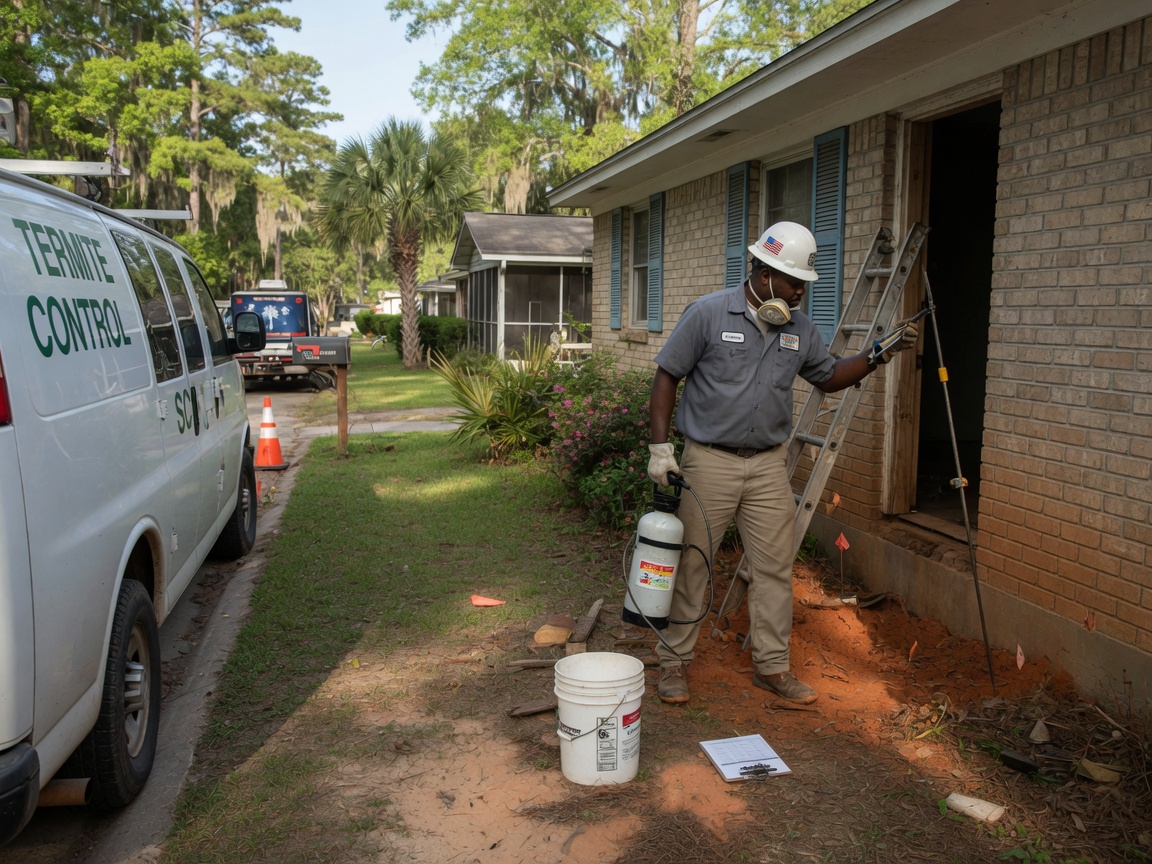
North Charleston homeowners know the importance of diligent termite control, especially with our humid subtropical climate. The warm, moist conditions here create an ideal environment for subterranean termites to thrive, making regular inspections and proactive treatments essential for properties across neighborhoods like Park Circle, Ashley River, and Liberty Hill. Our team at South Carolina Termite Guard is familiar with the unique challenges presented by North Charleston's diverse housing stock, from historic homes near the Charleston Naval Base Memorial to newer constructions closer to Riverfront Park.
Whether you're located off I-26 near the North Charleston Coliseum or in a quieter residential area like Accabee or Chicora, South Carolina Termite Guard provides thorough termite solutions. We understand that termite activity can escalate quickly in our area, which is why we offer responsive service to address any infestations. Our owner-operated approach means you get upfront quotes and workmanship you can inspect, ensuring your home in the 29405, 29418, or 29420 ZIP codes receives the dedicated attention it needs.
Around North Charleston
We regularly work near:
- 📍North Charleston Coliseum
- 📍Park Circle Historic District
- 📍Charleston Naval Base Memorial
- 📍Riverfront Park
Termite Control in North Charleston — Local Notes
- •North Charleston's older homes, particularly in areas like Liberty Hill and Russelltown, often have crawl spaces and original wood structures that are highly susceptible to termite damage.
- •The high humidity and frequent rainfall in North Charleston, especially during our hot summers, accelerate termite activity and create favorable conditions for colonies to flourish unseen.
- •Properties near the Ashley River or other waterways in North Charleston can experience increased moisture levels, drawing termites closer to foundations and wooden elements.
- •Given North Charleston's growth and varied construction, from the historic Park Circle Historic District to modern developments, termite control strategies need to be adapted to different building types and soil conditions.
Nearby cities we serve